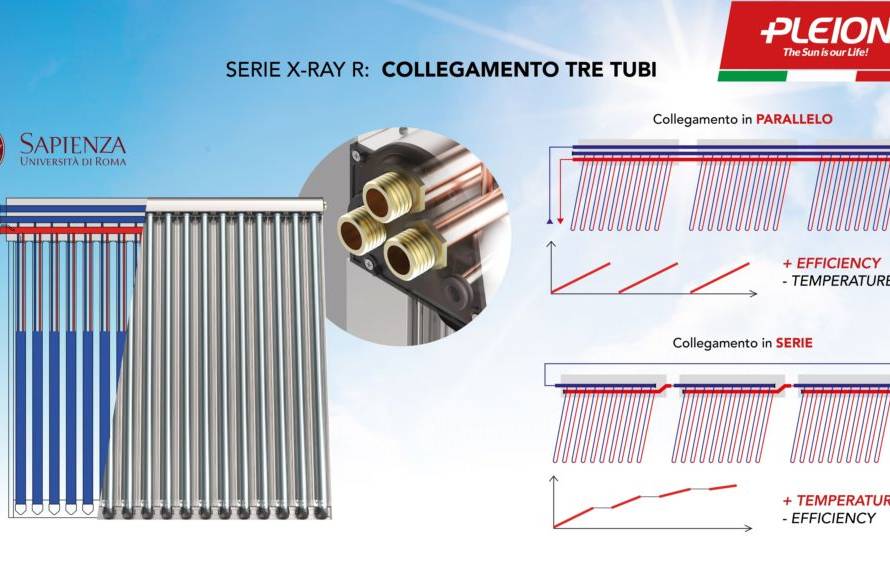
Solar thermal systems fall into two types: depending on whether a pump is used to circulate the water, they operate with natural circulation or forced circulation. Let’s look at the differences and characteristics of each system.
If you are reading this article, you probably already know what a solar thermal system is. It is one of the most beneficial technologies available to Italian households today for reducing their dependence on fossil fuels, making substantial savings on energy bills and lowering CO2 emissions.
This article takes a closer look at the characteristics of natural-circulation and forced-circulation systems. The two systems differ considerably: each has its own advantages and performs best in different applications.
Topics covered in this article:
- How does a solar thermal system work?
- What is the difference between natural-circulation and forced-circulation systems?
- How does a natural-circulation solar system work?
- How does a forced-circulation solar system work?
- Which system should you choose?
- Advantages of natural circulation
- Advantages of forced circulation
- The right technology for everyone, with Pleion
How does a solar thermal system work?
A solar thermal system combines several components to capture thermal energy from solar radiation and transfer it to domestic hot water or to the water used for space heating. This allows it to produce hot water using free solar energy, improving the home’s efficiency and reducing dependence on fossil fuels.
Hot water is produced using one or more solar panels, also called collectors, which convert the sun’s energy into heat, together with a storage tank that holds the hot water for later use.
Depending on whether a water circulation pump is used, there are two types: natural-circulation and forced-circulation solar thermal systems. Let’s examine their differences and characteristics.
What is the difference between natural-circulation and forced-circulation systems?
The main difference concerns how the heated fluid circulates through the system. In the first type, circulation occurs naturally through basic physical principles. In the second, an additional electrically powered device is used: the circulation pump.
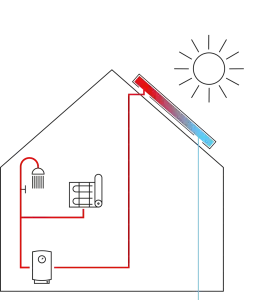
- In a natural-circulation system, the fluid moves because hot and cold fluids have different densities. As it heats up, the fluid expands, becomes less dense and rises towards the top of the collector, where the tank is located, or towards the water outlet in systems with integrated storage. There are also systems such as the innovative all-in-one EGO, in which domestic water flows through the panel simply under mains water pressure.
- In a forced-circulation system, water movement is provided by a circulation pump that starts when the collector reaches the temperature set for the tank. These systems also have a controller whose main task is to manage the circulation pump.
How does a natural-circulation solar system work?
Circulation is described as “natural” because no circulation pump is required. These systems operate through gravity, with the heated fluid rising to the top of the collector, or, as in the EGO solar thermal system, simply through mains water pressure.
Pleion’s natural-circulation range includes high-performance all-in-one systems intended exclusively for domestic hot water, with capacities limited to 300 litres. These systems do not use a separate heat-transfer fluid: the water is heated directly inside the collector.
How does a forced-circulation solar system work?
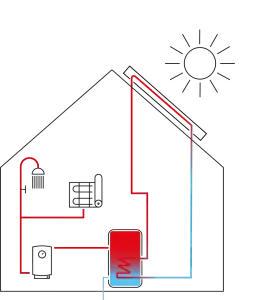
While a natural-circulation system may consist of a single all-in-one unit serving as both collector and tank, a forced-circulation collector forms part of a solar system with a separate storage tank and a circulation pump.
The flat-plate or evacuated-tube collector is connected to a primary circuit containing a heat-transfer fluid with antifreeze properties, usually a mixture of water and glycol. Once heated, this fluid carries the collected heat to the cylinder, where domestic hot water is stored.
The system also includes a controller that starts the circulation pump when the fluid in the collector is hotter than the water in the tank.
Which system should you choose?
Now that we have looked at how the two systems work, let’s examine the advantages of natural circulation and forced circulation.
Advantages of natural circulation
Natural-circulation systems are particularly advantageous in summer and in areas with high solar irradiation. Because they do not have a tank inside the home, sheltered from bad weather and falling night-time temperatures, they are not suitable for cold climates, for supporting space heating or for high domestic hot water demand.
Compared with other systems, natural-circulation systems are less expensive, more compact and offer good performance, especially in mild climates. Their main advantages are:
- Low maintenance;
- Low installation and maintenance costs;
- Little space required: the entire solar system is on the roof, with no indoor technical room needed for a cylinder;
- No energy consumption, unless local conditions require an electric frost-protection heater.
Pleion’s natural-circulation range also includes FreeGO, a portable all-in-one system that connects to a normal tap to provide hot water wherever it is needed, whether travelling or in your garden.
Advantages of forced circulation
Of the two types, forced circulation is the more versatile. One or more flat-plate or evacuated-tube collectors carrying a frost-protecting water/glycol mixture, together with the option of storing water in a solar cylinder in a sheltered location, provide good performance in all climatic conditions and allow the system to support space heating.
Although these systems are more complex and cost more, their advantages are clear:
- Greater thermal efficiency;
- Greater versatility;
- The ability to support space heating or heat a swimming pool.
Disadvantages include the need for an indoor technical room to house the cylinder/storage tank, circulation pump and other components, such as the solar expansion vessel, and an electricity supply for the pump and controller. However, the electricity consumed is very small compared with the renewable energy obtained from the sun.
The right technology for everyone, with Pleion
As this article shows, neither system is universally better than the other. Each delivers different performance and is better suited to particular applications.
To identify the best system for you, consider costs, demand and intended uses: domestic hot water only, or space heating as well. The building’s structural characteristics and the local climate also need to be taken into account.
For a more detailed assessment, contact one of our retailers or authorised service centres. An expert will help you choose the most suitable solar thermal system. Rely on the experience, expertise and manufacturing capabilities of a company that has reinvented solar thermal technology in Italy.